

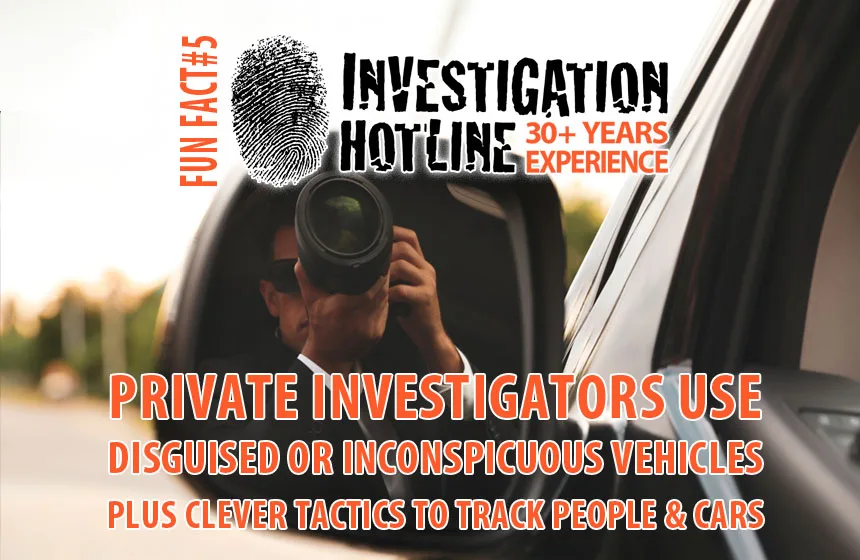
Private investigator cars are ordinary. The useful vehicle is a common model in a common colour, because that is what the street already looks like. A blacked-out truck with extra antennas is memorable, and memorable is the opposite of the job.
What cars do private investigators drive?
Teams use everyday cars and, sometimes, a motorcycle or a plain van, for the same reason. A vehicle that could belong to a tradesperson or another driver gives a reason to be parked on a public street. The point is to watch from a lawful place without becoming the thing everyone remembers. There is no preferred make. The preference is “already common on this block.”
On a moving file, an agency may send more than one vehicle so no single car has to sit directly behind someone for the whole trip. That is staffing. It is not permission to follow a car onto private property, block a driveway, or hide a tracker. If you were told a special car is required before anyone has defined the question, ask what the car is supposed to produce. The product is a log, not the vehicle.
What the vehicle is for
The car is a place to sit, write times, and take a photograph from a public spot. It is not a disguise kit and it is not a pursuit vehicle. A lawful note says who left, which direction, and who was with them, if that could be seen without trespassing. It does not require speeding, boxing a car in, or forcing a stop.
Hours often fall outside an office day, because that is when the person being documented is actually moving. Scheduling is covered on whether investigators work weekends. The car does not change that. It only has to be there during the window that was agreed.
Can a private investigator track your car?
A lawful file records what can be seen in public. Attaching a device to a car, reading a tracker the client has no right to use, or going into a garage is a different legal question, and a professional firm refuses it. If a device has been stuck to a car you own, take that to the police. This page is not a set of instructions for finding or placing one.
If the worry is that a person, not a device, is showing up around you, start with how to tell if you are being watched. Write the pattern. Do not chase the car.
What you should expect in the file
You should receive times, places, and images taken from a spot the investigator was allowed to be. You should not receive a promise of a cinematic follow, a hidden GPS, or entry onto private property. Those promises are how files become unusable. The limits are the same ones on what a private investigator cannot legally do.
What to ignore in the sales pitch
A quote that leads with the car, the tint, or a “stealth package” is selling a prop. Ask instead which hours will be covered, how many people are staffed, and what you will be handed at the end of the block. A single ordinary car and a clear log beat a fleet with no question attached. If the pitch includes a tracker “so we do not have to follow,” stop. That is not a convenience. It is a different legal act, and this firm will not do it or explain how to. The same goes for talk of armed operatives; private investigators and firearms in Canada is a separate legal question with a short answer.
You should also hear what the car will not do. It will not enter a parking garage that is not open to the investigator. It will not sit in a private driveway. It will not box someone in at a light to get a photo. If those limits are missing from the proposal, the proposal is incomplete. Add them before you approve a weekend or a holiday block, when the hourly cost is highest and the temptation to “just stay with them” is strongest.
The same rule applies if you think a car has been watching you. Note the colour, the rough model, and the time. Do not approach the driver and do not try to disable the car. Hand a repeated pattern to the police if you feel unsafe. An investigator you hire later can document a separate, lawful question. They should not be hired to retaliate. A plate number, if you can read it from where you already are, belongs in the note. Do not walk up to the bumper to get it.
Surveillance as a service, scoped before anyone goes out, is described on the tracking and surveillance page. This article is only the vehicle question. Two similar cars on one file are a handoff, not a chase. Call +1 416-205-9114 if you need the activity documented, not a lecture on cars.
Summarize with AI