

Why Investigation Hotline? Start with what clients say after a real file: professionalism, responsiveness, discretion, and clear value for the work scoped. Reviews are not a substitute for licensing checks or a scoping call, but they show how the firm behaves when people are under stress. Investigation Hotline is a licensed Ontario firm serving Toronto, the GTA, and province-wide since 1988. Read the full set on our reviews page, then use this guide to understand the themes behind those comments. For hiring process basics, see our Ontario hiring guide.
Why do customer reviews matter when choosing Investigation Hotline?
Private investigation is personal. Clients share sensitive family, workplace, or business details and need to know the team will treat that trust carefully. Customer feedback helps you see patterns in communication and professionalism before you call.
Reviews still have limits. They cannot prove a future finding, and they cannot replace Ontario licensing verification. Confirm credentials using the Government of Ontario page on security guard or private investigator licences, then ask how the firm would handle your objective.
For the broader decision framework on using reviews when hiring any PI, see why reviews are so important when hiring a PI. This page focuses on Investigation Hotline customer themes and what they mean in practice.
What customers often praise
- Professionalism: calm intake, clear boundaries, no theatrics
- Responsiveness: updates and answers when the file is active
- Discretion: careful handling of private details
- Quality: documentation that helps a real decision
- Value: scoped work tied to the question asked, not endless monitoring
Those words show up repeatedly because they map to what stressed clients need. A dramatic promise is less useful than a clear plan and lawful methods.
Examples of client feedback
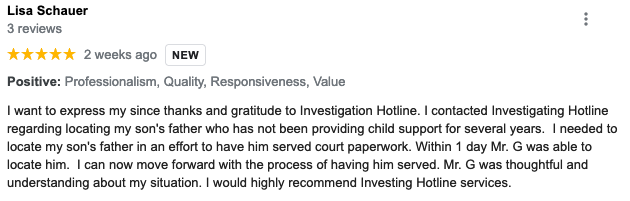
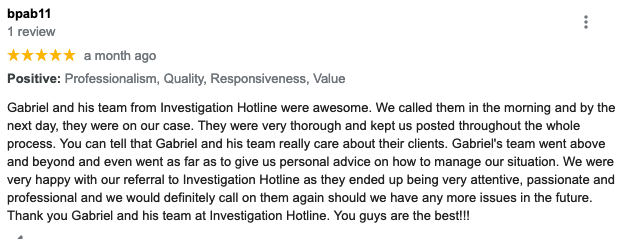
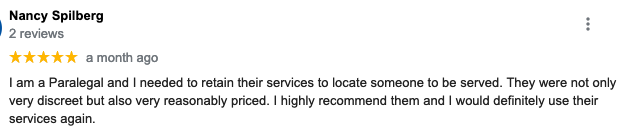
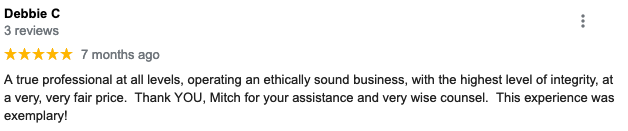
Below are review snapshots clients have shared publicly. They are examples, not a guarantee of your outcome. Read them as process signals: communication, care, and professionalism.
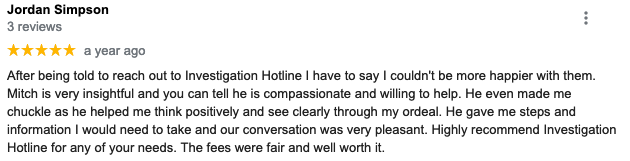
What those reviews usually mean in a real file
When clients say “professional,” they often mean the investigator explained limits, refused illegal shortcuts, and kept the conversation focused on evidence. When they say “responsive,” they mean updates arrived when promised and questions got straight answers.
“Good value” rarely means cheapest. It usually means the scope matched the decision, and the client did not feel sold an endless package. That is how Investigation Hotline tries to work: define the question, choose lawful methods, report clearly.
Founder Mitchell Dubros has led the firm since 1988. Longevity matters only if process stays disciplined. Customer comments are one way that discipline shows up publicly.
How to use customer feedback without over-trusting it
- Read for process details, not guaranteed outcomes.
- Match the review context to your case type when possible.
- Ignore marketing language about “catching everyone.”
- Verify licensing independently.
- Ask Investigation Hotline the same hard questions you would ask any firm.
- Freeze scope in writing before fieldwork starts.
For trust standards and comparison checklists beyond customer quotes, see why clients choose Investigation Hotline in Ontario. For selection mechanics, see how to pick a private investigator.
Case types clients commonly bring
Customer stories span personal, family, corporate, and locate needs. Infidelity documentation, missing-person support, anonymous threat concerns, workplace fact-finding, and screening questions all appear in real intakes. The common thread is incomplete facts and a decision that matters.
This page is not a service menu. If you are still deciding whether hiring makes sense, start with why hire a private investigator. If timing is the issue, see when to hire a private investigator.
What Investigation Hotline optimizes for in client experience
- Clear intake that turns stress into a scoped plan
- Lawful methods only, with explicit refusals when needed
- Reporting written for the real audience: you, HR, insurer, or counsel
- Communication cadence agreed up front
- Honest talk about uncertainty and limits
Treating each client with focused attention does not mean promising results. It means the file gets a real plan, not a generic sales script.
Discretion, legality, and why customers mention them together
In sensitive files, clients often pair “discreet” with “professional.” That pairing matters. Discretion without legality is just secrecy. Legality without care can still feel cold and careless.
Investigation Hotline aims for both: lawful methods and careful handling of private details. Customers notice when intake stays calm, when illegal requests are refused without drama, and when reporting stays factual. Those behaviours show up in reviews because they reduce fear during an already difficult process.
If a review only says “amazing” with no process detail, weigh it less. If a review describes clear communication and respectful boundaries, weigh it more. That is how to “ask our customers” usefully.
How customer feedback shapes the firm
Reviews are not only marketing. Specific comments about update cadence, report clarity, or intake confusion are operational signals. A firm that asks for feedback and adjusts process is easier to trust than a firm that only collects five-star screenshots.
When clients mention value, we look at whether scope matched the decision. When they mention responsiveness, we look at whether expectations were set at the start. Customer language becomes a checklist for the next file.
That loop is part of why asking customers is a fair way to evaluate Investigation Hotline. Public comments reveal habits. Habits predict experience better than slogans.
A simple path if you are comparing firms
- Skim Investigation Hotline reviews for process themes.
- Skim one or two competing firms the same way.
- Verify licensing for each option.
- Call with the same decision sentence and proof definition.
- Compare answers on methods, limits, reporting, and budget range.
- Choose the firm whose plan matches your decision, then freeze scope.
Customer praise should make you curious enough to call. The call should decide the hire.
Questions to ask after you read the reviews
Bring the review themes into intake. Ask who will work your file, how often you will get updates, what is off-limits, and what the report will include. If answers conflict with the professionalism described in public feedback, keep looking.
Also ask about confidentiality and media storage. Discretion is not only fieldwork. It includes how notes, photos, and reports are handled after the case.
If your matter involves immediate danger, contact police first. Customer reviews help you choose a civil investigator. They do not replace emergency response.
Personal, corporate, and domestic files through a customer lens
Personal files often turn on trust and timing: relationship doubts, safety worries, or a need for clarity before a hard conversation. Corporate files turn on independence and documentation: misconduct, theft patterns, or sensitive internal questions where politics can contaminate an in-house process. Domestic and family files often involve counsel, children, or household access.
Customers across those lanes still tend to praise the same basics. They want to be heard. They want lawful options explained without jargon. They want a report they can act on. That consistency is why customer language is a useful filter even when case types differ.
If your file is mainly about whether hiring makes sense at all, use the why-hire and when-to-hire guides linked above first. Come back to customer themes when you are comparing Investigation Hotline against other licensed options.
What we will not claim just because reviews are strong
- That every file ends with the answer you hoped for
- That illegal methods are available “off the record”
- That reviews replace a scoped contract
- That star ratings alone beat licensing and fit
Strong customer feedback raises the standard we have to meet. It does not create shortcuts around law or process. If another firm uses reviews to sell certainty or illegal access, treat that as a warning, not a competitive feature.
Ask our customers, then ask us the hard questions. The combination is how a careful Ontario hire gets made under real pressure.
Why Investigation Hotline FAQs
Are the reviews on this page the only ones?
No. They are examples. Browse the broader client feedback collection on the reviews hub linked at the top of this page.
Do positive reviews guarantee my result?
No. Reviews describe past experience with process and service. Findings depend on facts, access, and legal limits.
Should I choose Investigation Hotline only because of reviews?
No. Use reviews as one signal beside licensing, scope clarity, and fit for your case type.
Can I leave a review after my case?
Yes if you want to. Keep confidential case details out of public posts. Speak to professionalism, communication, and process.
What if my case is different from the reviews I read?
Say so in intake. A good firm will tell you whether your objective fits, needs a different method mix, or should wait.
How do I start?
Read recent feedback, confirm licensing questions, then book a confidential consultation with a clear decision sentence ready. Bring deadlines and known details so intake can stay efficient.
Ready to see if we are the right fit?
If customer themes around professionalism and clear communication match what you need, Investigation Hotline can review your objective and outline options. Call (416) 205-9114 or use our contact page for a confidential consultation.
To learn more, contact Investigation Hotline at