
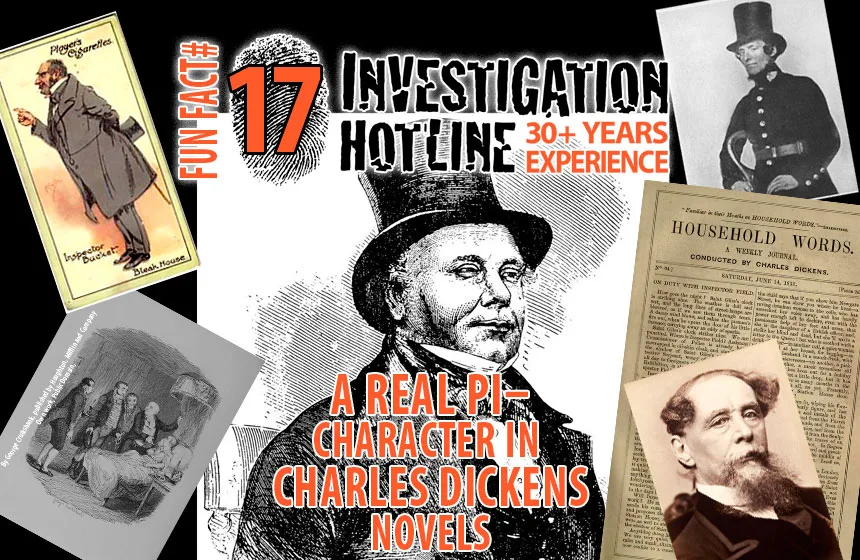
Charles Frederick Field was a real nineteenth-century London investigator whose career helped shape how readers imagined detectives. Charles Dickens drew on Field when creating Inspector Bucket in Bleak House and wrote about Field in the sketch “On Duty with Inspector Field.” Investigation Hotline is a licensed Ontario firm. This page explains who Field was, how Dickens used him, what that history still teaches clients, and how modern private investigation differs from Victorian fiction. For how the private detective trade began earlier in France, see the first private detective agency in history.
Who this helps: readers researching PI history, students of detective fiction, and clients who want fiction separated from licensed practice.
What you receive: Field’s path from Scotland Yard to private work, Dickens connections, lessons that still apply, and links into practical Ontario hiring guides.
Why this spoke: this page owns the Dickens and Field story. Hiring process, myths, and service menus belong on their own posts so history stays readable.
Who was Charles Frederick Field?
Charles Frederick Field (1805-1874) served as a British policeman connected with Scotland Yard-era detective work in London. After leaving public service, he continued investigative work in a private capacity. That transition matters historically: it shows how skilled investigators moved between public policing and paid private inquiry long before modern licensing regimes existed.
Field became known for practical street knowledge, methodical observation, and a public reputation that novelists and journalists found useful. Victorian London was crowded, mobile, and full of fraud, theft, and missing-person problems that needed patient inquiry. Field’s career sits inside that world, not inside a comic-book spy fantasy.
Confirm modern Ontario investigator licensing on the Government of Ontario page for security guard or private investigator licences. Investigation Hotline has served Ontario clients since 1988 under founder Mitchell Dubros.
How did Dickens turn Field into Inspector Bucket?
In Bleak House (serialized 1852-1853; book form soon after), Inspector Bucket appears as a capable, observant detective figure. Literary critics and Dickens scholarship have long linked Bucket to Field. Dickens portrays the character with respect rather than as a cartoon villain. Bucket is attentive, socially fluent, and focused on facts that move a complex plot forward.
Dickens also wrote the nonfiction sketch “On Duty with Inspector Field,” which brings readers along on night work through London. That sketch helped fix Field in the public imagination as a living model for detective competence. Friendship and professional admiration both play into the story: Dickens knew Field and used that knowledge carefully in fiction and reportage.
Bleak House is often discussed among early major British novels with a strong detective thread. Exact ranking as “first” depends on how scholars define detective fiction. The safer claim is that Bucket helped make the professional investigator a serious literary figure for English readers.
What Field’s story teaches about private investigation
Field’s path shows three durable ideas. First, investigation is a craft of observation and documentation, not theatrical confrontation. Second, public trust grows when methods look careful and proportionate. Third, private clients have always needed someone who can gather facts outside a full police file when the problem is civil, commercial, or personal rather than a public prosecution priority.
Those ideas still matter in Ontario. Modern files may involve digital trails, workplace policy, insurance claims, or family evidence, but the core remains the same: define the decision, preserve what can be preserved, and report what was observed without inventing certainty. For what day-to-day work looks like now, see what a private investigator actually does.
Fiction vs licensed practice today
Victorian novels compressed weeks of inquiry into dramatic scenes. Real files are slower, quieter, and constrained by law. Ontario investigators work under licensing and privacy expectations. They do not break into homes for plot convenience, plant illegal devices for entertainment value, or guarantee Hollywood endings.
Clients who arrive with fiction expectations often ask for illegal shortcuts. A professional answer is a scoped plan: lawful surveillance where justified, open-source research, interviews, records work you have authority to pursue, and referrals when specialty forensics are needed. For common myths about legal limits, read what private investigators can and cannot do.
Dickens respected Field’s competence. Modern clients should respect process the same way: written objectives, milestones, and honest limits beat dramatic promises.
Why detective fiction still shapes client expectations
Bucket and later detective heroes taught audiences that a skilled investigator can notice what others miss. That expectation is useful when it creates patience for careful work. It becomes harmful when it creates demand for illegal entry, guaranteed proof in one night, or confrontational stunts that tip subjects and ruin evidence windows.
History helps reset the conversation. Field’s reputation grew from sustained professional work in a real city, not from one miraculous clue. Dickens amplified that reputation because careful inquiry made compelling narrative. Your file should aim for the same foundation: dated observations and clear reporting language that counsel or decision-makers can use.
A short timeline around Field and Dickens
- 1805: Charles Frederick Field is born
- Mid-century London detective culture expands inside and around Scotland Yard traditions
- Field builds a public reputation for investigative skill
- Early 1850s: Dickens publishes “On Duty with Inspector Field”
- 1852-1853: Bleak House introduces Inspector Bucket to a wide readership
- After public service: Field continues private investigative work
- 1874: Field dies; the literary image of the professional detective continues to grow
Exact duty titles and organizational labels shifted across Victorian reforms. Use the timeline as orientation, then verify any academic claim against primary sources if you need scholarly precision.
How this history page fits Investigation Hotline content
Use this spoke when your question is Dickens, Field, or early detective fiction roots. Use the Vidocq history post when your question is the first private detective agency model. Use practical guides when you are ready to hire in Ontario. Start with our Ontario hiring guide, then how to pick a private investigator and when you should hire a private investigator.
For a menu of modern service lanes rather than history, see what services private investigation companies provide. Keeping history and hiring pages separate builds topical authority and reduces cannibalization.
Lessons Ontario clients can take from Field without copying Victorian methods
Ask for competence, not charisma theatre. Ask what methods fit your decision sentence. Ask how updates work and what a negative finding looks like. Ask about licensing and discretion. Those questions echo why Dickens trusted Field: the work looked serious.
Also protect non-involved people from gossip. Victorian London thrived on rumour. Modern workplaces and families still do. Need-to-know habits protect evidence windows and reputations while facts are gathered.
Finally, separate admiration for detective fiction from instructions to your investigator. Inspiration is fine. Illegal instructions are not. A licensed firm will refuse unlawful requests and propose lawful alternatives.
Mistakes readers make after learning PI history
Assuming every literary detective maps one-to-one onto a living person oversimplifies scholarship. Bucket is shaped by Field, but fiction still compresses and invents. Assuming Victorian methods are legal today is worse. Surveillance law, privacy statutes, and licensing did not exist then in the Ontario form clients face now.
Another mistake is treating history posts as a substitute for intake. Knowing Field’s story does not scope your custody, fraud, or workplace file. Bring timelines, documents, and the decision you need to make.
How to judge a modern investigator after reading detective history
A useful proposal names methods, locations or systems, time windows, and decision points. It does not hide assumptions inside a vague package inspired by novels. Ask for milestones and a stop rule. Ask how reports are written. Ask what cannot be promised. Those habits honour the Field tradition of professional seriousness without pretending your case is a serialized mystery.
Also ask how the firm handles tip risk. Dickens could publish colourful night walks. Your investigator cannot advertise your file. Discretion is part of modern craft.
Charles Dickens and private investigator FAQs
Was Inspector Bucket a real person?
Bucket is a fictional character. Dickens is widely understood to have drawn on Charles Frederick Field when shaping him.
Did Field work only for the police?
No. After public service he continued investigative work privately, which is why he appears in histories of early private inquiry as well as policing.
Is Bleak House the first detective novel?
It is a major early British novel with a strong detective thread. Whether it is “first” depends on definitions used by literary historians.
Does PI history change how I should hire in Ontario?
It should raise your standard for professionalism and lawful methods. It does not replace licensing checks, written scope, and counsel when needed.
How do we start with Investigation Hotline?
Bring the decision you need to make, a short timeline, and key documents. Ask which methods fit and which can wait. History can wait; process should not.
Ready for facts instead of fiction?
If your Ontario matter needs lawful documentation rather than novel-plot shortcuts, Investigation Hotline can review the objective and outline options in a confidential intake. Call (416) 205-9114 or use our contact page for a confidential consultation.
To learn more, contact Investigation Hotline at