The standard behind every Investigation Hotline case is simple: if a matter is not ethical, not lawful, or not likely to help the client, the firm can say no. Mitchell Dubros, founder and lead investigator, has built that rule into practice across decades of Ontario work. Investigation Hotline serves Toronto, the GTA, and province-wide clients who need facts without illegal shortcuts or empty promises. This page explains what that standard looks like in intake, fieldwork, and reporting. For community-impact context, see how Investigation Hotline positively impacts our community.
Who this helps: clients comparing firms who want to understand ethics, selectivity, and realistic expectations before hiring.
What you receive: how saying no protects clients, what ethical intake includes, lessons from hard files, and how to judge a professional standard.
Why this spoke: this page owns Investigation Hotline’s case standard and ethical selectivity. The founder bio, hiring guides, and legal-myth pages stay on their own URLs.
What is the Investigation Hotline case standard?
It is a decision filter used before and during a file: lawful methods only, honest scope, and a clear decision sentence the work can actually support. The firm does not treat every paying inquiry as automatic work. Some requests ask for illegal entry, guaranteed outcomes, or confirmation theatre. Those requests get refused or redirected.
Confirm investigator licensing on the Government of Ontario page for security guard or private investigator licences. Licensing sets a floor. The case standard is the firm’s internal ceiling for what it will accept.
Why saying no is part of professional growth
Most growth advice says take every client. Private investigation is different. A bad file can create liability, tip subjects, waste money, or leave a client worse off than before. Mitchell has seen firms overpromise, blur legal limits, or accept work that cannot help. Investigation Hotline was built to do the opposite: transparent intake, realistic limits, and willingness to walk away when the ask is wrong.
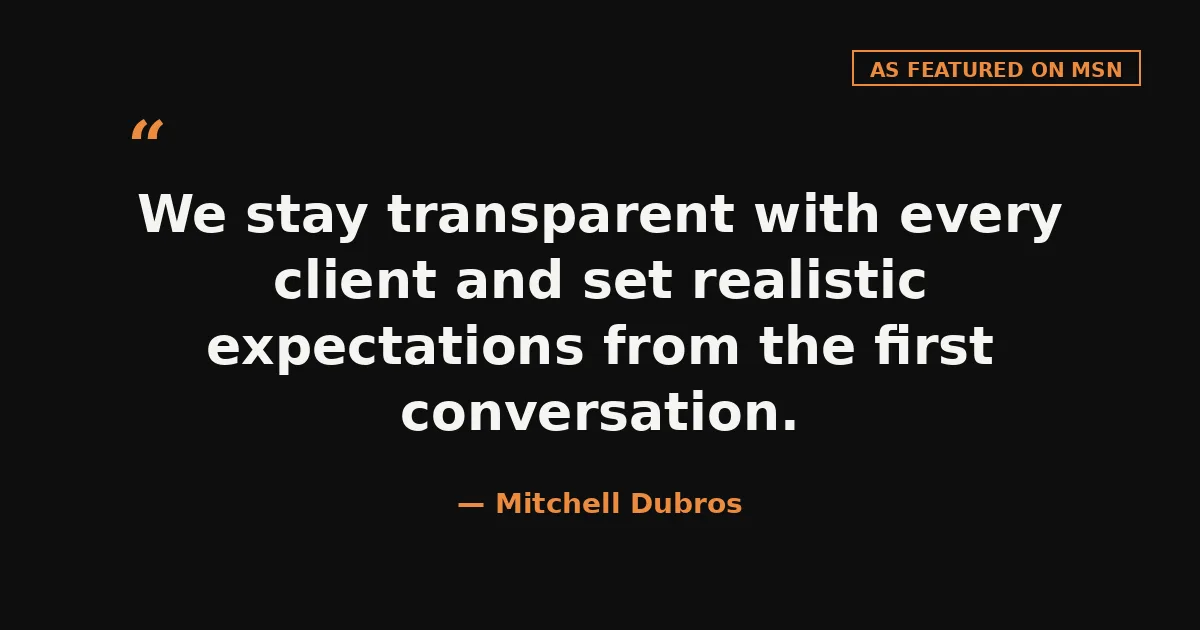
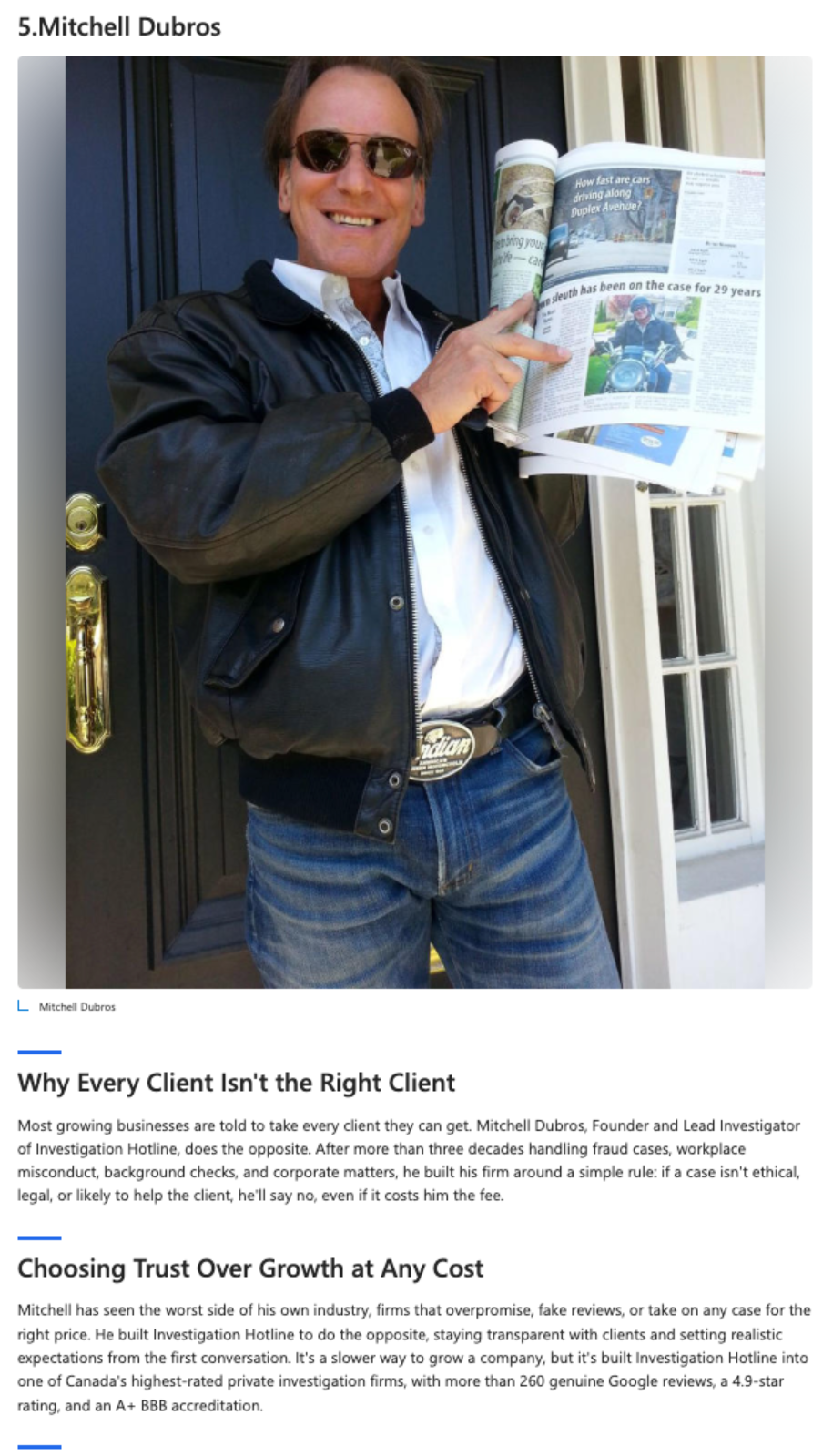
That approach can mean turning down revenue a less selective firm would take. It also means the files that do proceed are scoped to help, not merely to bill. Mitchell was featured on MSN with other entrepreneurs discussing founder rules that reject growth-at-all-costs habits. Read the MSN feature.
Selectivity is not hostility to clients. It is respect for their money and risk. A short refusal with a better next step can protect someone more than a poorly fitted investigation that tips a subject and solves nothing.
What ethical intake looks like in practice
- Write the decision the client needs to make
- Separate facts already known from theories
- Name lawful methods that fit the objective
- Disclose tip risk, time windows, and budget ranges
- Set milestones and a stop rule before open-ended hours begin
- Refuse illegal instructions and explain lawful alternatives
Clients under stress often want certainty overnight. Ethical intake slows the conversation just enough to protect evidence quality and legal risk. For how to evaluate firms during selection, see how to pick a private investigator. For common myths about legal limits, see what private investigators can and cannot do.
Cases the standard usually declines
- Requests for illegal entry, trespass shortcuts, or unlawful recording
- Demands to guarantee a specific finding before work starts
- Instructions to harass, confront, or publicly shame a subject mid-file
- Files where the client only wants confirmation and rejects any all-clear
- Matters better handled first by police, counsel, or clinical support
Declining is not moral theatre. It is risk management for the client and the community. A firm that never says no is not proving bravery. It is often proving weak filters. Clients deserve that honesty before hours and tip risk begin.
What the approach has built over decades
Investigation Hotline has served Ontario clients since 1988. Trust metrics clients often check include public reviews and Better Business Bureau accreditation. Those signals matter, but they are not a substitute for a scoped proposal on your file. Past ratings do not guarantee future outcomes. They do suggest a pattern of process and communication that many clients valued.
The deeper payoff is repeatable process: clients told what can and cannot be uncovered, then receiving reports that match that honesty. For day-to-day craft beyond ethics framing, see what a private investigator actually does.
A case lesson: look past the obvious pathway
Mitchell has described a file involving a high-performance offshore racing boat tied to a large insurance payout. After locating the vessel in Florida and reporting it, the matter did not resolve cleanly and the boat disappeared again. The handling raised questions that did not end with the first find.
Rather than stop at the first report, the vessel was located again and authorities were alerted so it could be secured. The lasting lesson Mitchell draws is that fraud and obstruction do not always sit where people first look. Sometimes an investigation must test the people and processes positioned to benefit if a file goes cold.
That lesson supports the case standard: keep looking at incentives, preserve facts carefully, and do not confuse a partial update with a finished job when the decision still needs cleaner resolution. Soft language matters here. Each file has unique facts. Past cases illustrate judgment under pressure; they are not promises about your matter.
Why this standard matters when you hire
Hiring a private investigator is an act of trust, often when trust elsewhere already feels thin. People call about fidelity concerns, business partners, locates, fraud, or other private uncertainties. They need clarity, not only an outcome that confirms what they already believe.
An investigation that only mirrors the client’s theory is poor value. A firm that accepts every request regardless of merit is hard to rely on when the stakes are high. Turning away the wrong cases so the right ones get done properly is part of how a practice lasts decades instead of chasing one-time transactions.
For Ontario hiring process steps, start with our Ontario hiring guide.
How the standard shows up in reports
Good reports date observations, name methods, and state limits of what was not seen. They separate facts from optional commentary. They do not invent certainty to please a paying client. Quiet findings and all-clears are legitimate professional outcomes when the exhibits support them.
Clients should expect updates matched to milestones, not constant theatre. Active fieldwork is a poor time for long debates. Agree communication rules in intake so the standard survives pressure later.
When counsel is involved, ask whether privilege and report audience change the format. Ethical standards include writing for the real decision-maker, not for dramatic storytelling. That habit keeps exhibits usable if negotiation or litigation follows.
Mistakes clients make when evaluating standards
Choosing the firm that promises the most dramatic result is a common error. Asking for illegal shortcuts “just this once” is worse. Ignoring stop rules and expanding hours without a new decision sentence wastes budget. Treating reviews as guarantees also misreads what trust metrics can prove.
Ask what the firm refuses. Ask what a negative finding looks like. Ask how licensing and discretion work. Those questions reveal standards faster than slogans. If answers stay vague while promises stay huge, treat that as a warning, not a bargain.
How to judge a proposal against this standard
A useful proposal names methods, windows, tip risk, and decision points. It discloses assumptions. It explains lawful limits. It does not hide surveillance or digital work inside vague packages. If a proposal promises guaranteed proof or illegal access, walk away.
Also ask who owns updates and when specialty referrals appear. Ethical standards include knowing when another professional should lead.
Ethical investigation standards FAQs
Will Investigation Hotline take every case?
No. Files that are unlawful, unethical, or unlikely to help can be declined or redirected.
Does saying no mean my problem is not serious?
Not necessarily. It may mean the requested method is wrong, another professional should lead first, or the objective needs rewriting.
Are reviews the same as the case standard?
No. Reviews are public feedback. The case standard is the intake and methods filter used on each file.
Can I still hire if I only want my theory confirmed?
You can ask for documentation of facts. A professional firm will not promise to manufacture confirmation.
How do we start a confidential intake?
Bring the decision you need, a short timeline, and key documents. Ask which methods fit and which requests cannot be accepted.
Ready for an investigation held to a clear standard?
If your Ontario matter needs lawful documentation and honest scoping, Investigation Hotline can review the objective and outline options in a confidential intake. Call (416) 205-9114 or use our contact page for a confidential consultation.
To learn more, contact Investigation Hotline at