
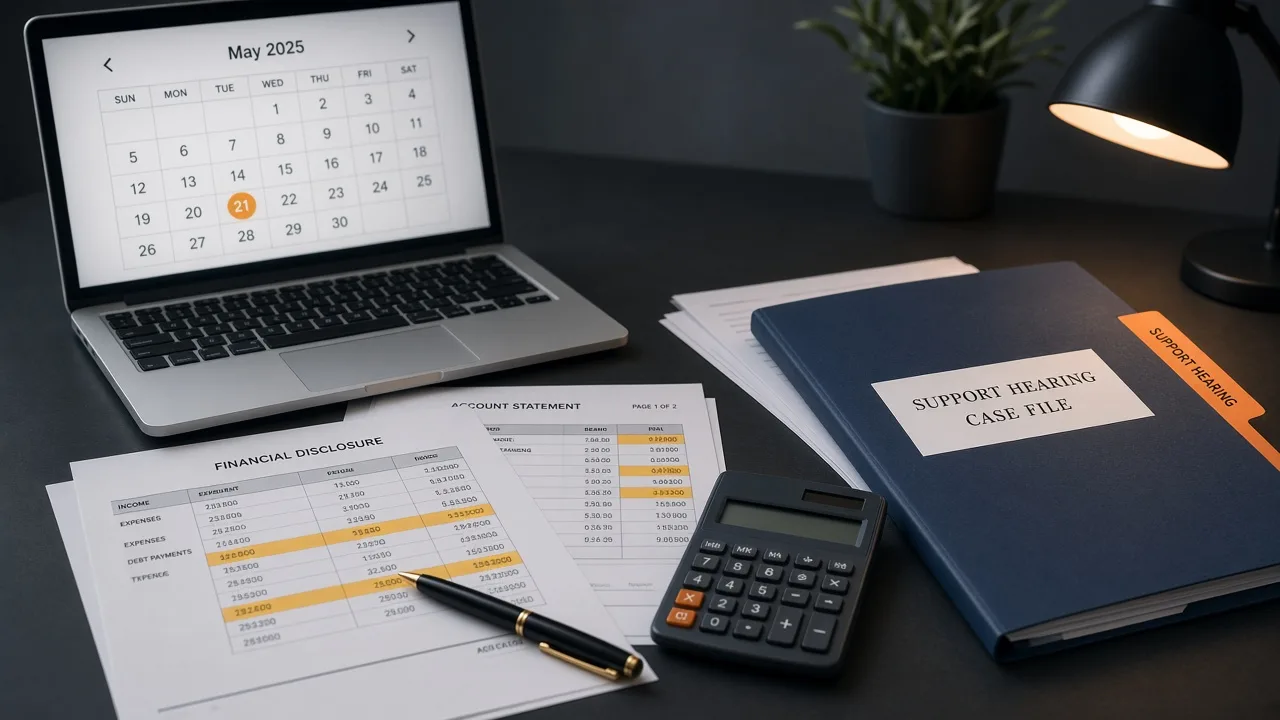
Support payments warrant a private investigation when disclosure is incomplete, lifestyle contradicts claimed income, cohabitation may change entitlement, or arrears sit unpaid while capacity appears real. Investigation Hotline helps Ontario clients decide DIY documentation versus licensed fieldwork. This is a decision framework for support files, not a general complaint about unpaid child support.
Knowing when support payments warrant investigation saves budget: some gaps need counsel and disclosure first; others need lawful fieldwork.
Many people wait too long, hoping another financial statement will magically become honest. Others hire an investigator on day one with nothing but anger. The useful middle is a threshold test: what can you prove with records you already control, and what still needs independent observation or research?
When the answer is income, cohabitation, or ability to pay, start with our hub for support payment investigations. If the fight is parenting fitness or custody, that is a different mandate. Keep the legal question clean so the evidence stays relevant.
When is DIY documentation enough?
DIY work is enough when the other party’s filings already contradict bank statements, tax slips, or employment letters you lawfully hold, and counsel can use those contradictions without new fieldwork. Preserve dates, keep originals, and stop collecting through unlawful logins or pretext calls.
- You have employer confirmation the other side denied
- Public business ads continue after claimed unemployment
- Written cohabitation admissions already exist in texts you lawfully possess
- Counsel says formal production will likely force the missing numbers
DIY fails when the activity is off-book, the household pattern needs timed observation, or every useful lead sits outside documents you can compel quickly. That is when licensed investigation earns its keep.
What thresholds usually justify hiring an investigator?
Ontario support files justify investigation when three conditions line up: the dollars at stake are material, ordinary disclosure left open holes, and a factual pattern already points to undeclared work or a shared household. Licensed investigators then document public activity, open-source leads, and timelines counsel can use. Investigation Hotline has supported family and civil matters since 1988 under Ontario licensing rules. Reports are written as court-usable documentation, not as social media exposés. A confidential consult can confirm whether you are at the hire threshold or still in the organize-your-file stage.
- Material support dollars or arrears, not a symbolic dispute
- Gaps after normal disclosure requests
- Independent red flags already noted with dates
- A hearing, conference, or enforcement step on the calendar
How do cohabitation questions change the hire decision?
Cohabitation is rarely proven by one dinner photo. It is proven by residential patterns over time. If your only evidence is rumour, start with a short observation scope rather than an open-ended project. If patterns already look residential, investigation can harden the record before affidavits are sworn.
Do not fold parenting grievances into a cohabitation brief. Judges and opposing counsel notice when relevance drifts. For parenting or custody disputes, keep that work on its own track rather than forcing it into a support-payment mandate.
What about enforcement when an order already exists?
If you already have a support order and the payor claims poverty while working or living well, investigation can support enforcement strategy. Lifestyle and employment evidence help counsel argue capacity. Related property questions may also need assets identification and enforcement. Sequence those tools with your lawyer so each report answers one question.
Enforcement files still require lawful methods. Investigators document what can be seen and researched. Garnishments, formal production, and court remedies remain legal steps handled by counsel or enforcement offices.
When should you wait and keep documenting?
Wait when emotions are high but facts are thin. Wait when counsel expects production within days and fieldwork would tip the subject for no gain. Wait when the only “proof” is second-hand gossip with no dates. Keep a chronology anyway. Clean notes make later investigation cheaper and sharper.
For hearing-specific income signs, see signs a spouse may be hiding income before a support hearing. That post owns the red-flag checklist. This post owns the hire-versus-wait decision.
What investigators will not do on a support file
They will not hack accounts, seize bank records by pretext, or guarantee a support order. They will not provide a custody opinion under a support mandate. Ontario licensing and privacy limits still apply when the file feels urgent.
- Support income and household questions: support-payment hub
- Parenting or custody disputes: separate custody service lane
- Hidden property for enforcement: assets identification
People searching for when to hire a private investigator for support payments in Ontario should treat the decision as process, not punishment. Start with the legal theory: income imputation, cohabitation, or enforcement capacity. List what disclosure already shows. List what remains unknown. If the unknowns are observable in public or researchable through lawful means, engage a licensed investigator with a written scope and a deadline tied to counsel’s calendar. If the unknowns require formal court process alone, spend on legal strategy first. That split prevents wasted fees and keeps the evidence package aligned with Family Court relevance.
How to brief an investigator once you decide to hire
Bring the financial statement, key dates, known addresses, and the three inconsistencies that matter most. Name the hearing or conference target. Ask for a scope that can finish in time. Vague instructions produce vague reports.
- Map deadlines backward from the hearing or settlement conference
- Separate income questions from parenting questions in the brief
- Agree on reporting format your lawyer prefers
- Decide whether asset tracing is in or out of the first scope
- Preserve your own notes separately from the investigator’s report
Cost discipline without false economy
Investigation is not always the next dollar you should spend. Sometimes a focused lawyer letter unlocks disclosure faster. Sometimes a short surveillance burst answers one narrow question and stops there. Ask for phased scopes with a decision gate after the first round. Open-ended watching without a proposition is how budgets disappear.
Also avoid amateur stakeouts by relatives. Unlawful or sloppy observation can taint later professional work and create safety or credibility problems. If public activity needs verification, use licensed investigators under a defined mandate.
Confidential consult before you spend
If you are unsure whether support payments warrant investigation yet, call Investigation Hotline at +1 416-205-9114 or use the contact page. We will tell you plainly whether to keep documenting, hire under the support payment investigations mandate, or route the file elsewhere.
To learn more, contact Investigation Hotline at