
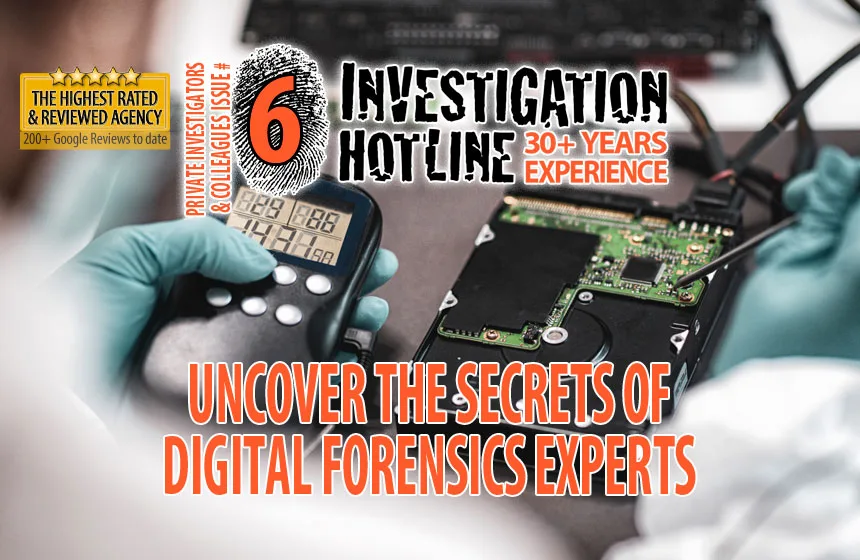
Digital forensics experts recover and interpret evidence from computers, phones, storage media, and related systems when a private investigation needs more than observation and open research. Investigation Hotline is a licensed Ontario firm that coordinates digital investigations with technical specialists across Toronto and the GTA. This is Issue #6 of our PIs and Colleagues series. For the series hub, see collaborative power of private investigators. For broader forensic lanes, see Issue #5 on leveraging forensic expertise.
Who this helps: businesses, counsel, and individuals facing account compromise, device questions, cyber fraud trails, or deleted-data concerns.
What you receive: when to bring digital forensics experts into a PI file, what they can and cannot do, and how to prepare without destroying evidence.
Why this spoke: Issue #6 is digital forensics specialists. Process-depth digital forensic methodology stays on the approach pages. Cyber crime overview stays on its own spoke.
What do digital forensics experts do beside a PI?
They focus on technical preservation and analysis: imaging devices, examining logs, recovering accessible artifacts, and reporting findings in a form counsel or leadership can review. The licensed investigator usually remains the coordinator for fieldwork, interviews, open-source research, and overall case narrative. Specialists answer bounded technical questions.
Confirm investigator licensing on the Government of Ontario page for security guard or private investigator licences. Digital forensics credentials are separate and should be checked for the specialist retained. Investigation Hotline has served Ontario clients since 1988 under founder Mitchell Dubros.
When should you involve digital forensics experts?
- Phones, laptops, servers, or cloud accounts are central to the dispute
- Deleted messages, wiped drives, or altered logs may matter
- A business email compromise or phishing wire diversion needs a technical trail
- Counsel wants a forensically defensible image before staff keep using a device
- Internal IT already touched systems and the chain of custody is unclear
Do not add digital forensics by default. If the file is a clean surveillance window or a public-record locate, specialty imaging may be unnecessary. Start with the decision sentence, then expand. For when a PI helps with cyber issues more broadly, see how a private investigator can help with cyber crime. If you only need compromise signs first, compare have I been hacked.
How digital forensics experts and investigators work together
Good collaboration is role-clear. The investigator scopes objectives, manages client communication, and gathers what can be observed lawfully. The digital forensics expert handles authorized acquisition and technical analysis. Counsel may retain either or both depending on strategy. Partnership mechanics are covered in Issue #2 on partnership models.
For process detail on digital forensic investigation as a PI approach, see digital forensic investigation. Keep that page for methodology depth; keep Issue #6 for the colleague role and when to hire that specialty into a collaborative file.
Cloud, mobile, and remote-work evidence
Many Ontario files now turn on phones and cloud mail more than desktop towers. Shared drives, messaging apps, and vendor portals can hold the decisive timeline. Digital forensics experts may need exports from platforms you control, plus device images when local caches matter. Tell the team which apps were in use before anyone resets passwords in the wrong order.
Remote-work environments add tip risk. If the subject still has VPN or admin rights, containment and evidence preservation must be sequenced with IT and counsel. The investigator can help map behaviour and interviews while the digital forensics expert protects the technical trail. Do not treat password changes and mailbox searches as harmless first steps without a plan.
What digital forensics can and cannot do
Experts can often preserve volatile evidence, document timelines from artifacts, and identify traces that casual browsing misses. They cannot guarantee recovery of every deleted item, reverse every crypto transfer, or hack into accounts without lawful authority. Illegal access creates new risk and can poison evidence.
Ask what the method supports for your actual decision: termination, recovery efforts, insurer package, or counsel strategy. Magical promises of “we can get everything back” are a warning sign.
How to prepare before digital forensics starts
- Stop factory resets, OS reinstalls, and “cleanup” apps
- Preserve devices powered as found when counsel advises; do not keep probing
- List accounts, cloud services, and who else has admin access
- Export what you already have authority to share: emails, invoices, chat backups
- Say whether police, insurers, or regulators are already involved
Clear notes reduce cost and protect chain of custody. Friends should not image phones as a favour. Amateur tools can overwrite the artifacts you need. If opposing counsel or an insurer may review the package later, say so early so reporting format matches that audience.
Business and personal files: different pressures, same evidence rules
Companies often face vendor impersonation, insider data theft, and ransomware aftermath questions. Individuals often face account takeover, romance or investment fraud trails, and device disputes in family matters. In both lanes, early preservation beats late speculation.
Workplace files may involve privacy statutes, union rules, and counsel direction. Do not seize personal devices without legal advice. Corporate devices still need a written authority path before imaging. The investigator and digital forensics expert should know who owns each step before work begins.
What good collaboration looks like
- One written objective shared by investigator, specialist, and counsel where involved
- Named owners for devices, cloud accounts, and fieldwork
- Agreed acquisition method and evidence storage rules
- Separate budget ranges for investigative hours and forensic analysis
- A stop rule if early findings do not justify deeper recovery work
- A report format matched to counsel, insurer, board, or the client
Poor collaboration looks like IT wiping machines “to be safe,” staff continuing to use the key laptop, or specialty work ordered only after public accusations. Fix process before adding tools.
Mistakes that destroy digital evidence windows
Continuing to browse on a compromised machine, installing antivirus “cleaners,” syncing cloud accounts after suspicion rises, or forwarding exhibits through personal email can alter metadata and tip subjects. Social-media accusations can also collapse a documentation window.
Paying recovery scammers who promise to reverse irreversible transfers often creates a second loss. Ask for lawful options: banks, platforms, counsel, and documented investigative findings.
How to judge a digital forensics proposal
A useful proposal names devices in scope, acquisition method, turnaround, and decision points. It does not hide fees inside a vague cyber package. Ask what a negative or limited finding looks like. Ask how images are stored and who can access them. Ask what would pause analysis. Those questions separate serious specialty work from marketing theatre. Ask for milestones before deep recovery expands so you are not paying for open-ended work without a defined objective.
Also ask about discretion limits honestly. Professional tradecraft reduces tipping risk. No ethical firm can promise invisibility in every network environment. Protect non-involved staff from gossip while the technical work is active.
Series map reminder
Issue #1 is the hub. Issue #2 is partnership mechanics. Issue #5 is forensic expertise across lanes. Issue #6 is digital forensics experts. Link to the spoke that matches your question, then return to the hub when you need the overview again. Bookmark Issue #6 when devices are likely to matter even if the first week is still observational. That pattern helps readers and search systems see digital forensics as one specialty lane inside the collaboration cluster, not a duplicate of every cyber article on the site.
Digital forensics experts FAQs
Is a digital forensics expert the same as a hacker for hire?
No. Lawful digital forensics works with authority you already have or counsel directs. Unauthorized access is not private investigation.
Do I need digital forensics on every cyber suspicion?
No. Start with scoping. Add imaging when devices or logs are central and preservation risk is real.
Can deleted data always be recovered?
No. Recovery depends on device state, overwrites, encryption, and cloud retention. Ask for realistic limits before spend expands.
Who should retain the digital forensics expert?
Sometimes the investigator; sometimes the client or counsel. Issue #2 explains those models.
How do I start with Investigation Hotline?
Bring your decision sentence, device list, timeline, and whether counsel is involved. Ask which steps are investigative versus forensic.
Ready to add digital forensics the right way?
If your Ontario matter may need a licensed investigator plus digital forensics experts, Investigation Hotline can review the objective and outline options in a confidential intake. Call (416) 205-9114 or use our contact page for a confidential consultation.
To learn more, contact Investigation Hotline at