
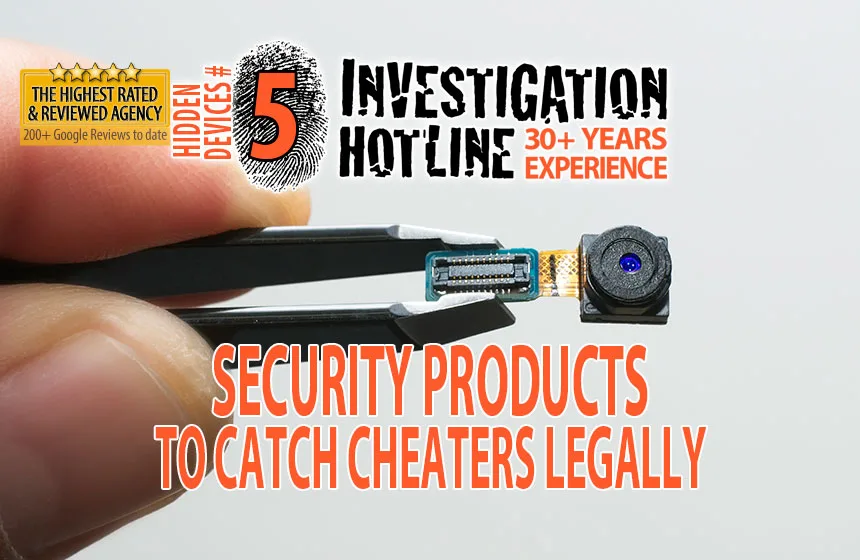
Security products marketed to catch a cheater can look simple: spy cameras, GPS trackers, phone spyware, and keystroke tools sold as “peace of mind.” In Canada those same tools often create criminal, civil, and evidence problems that leave you worse off than before. Lawful proof of infidelity usually means a licensed infidelity investigation, not homemade surveillance that breaks privacy rules.
This guide explains which product categories people buy, what can go wrong under Canadian and Ontario law, when courts reject DIY evidence, and how licensed investigators gather facts you can actually use. It is general information, not legal advice. Confirm your situation with counsel before you install anything.
What security products do people buy to catch cheaters?
Retail and online listings push several product families toward suspicious partners. Understanding the category helps you see the legal risk before money leaves your account.
- Hidden cameras: clock cams, USB chargers, smoke detector shells, and nanny cams aimed at bedrooms, living rooms, or vehicles
- Audio recorders: voice activated pens, wall plugs, and phone apps that capture conversations without consent
- GPS trackers: magnetic undercarriage units, OBD plugs, and phone based location sharing used without the other person knowing
- Spyware and stalkerware: apps that mirror texts, call logs, photos, or social accounts on a partner phone
- Keyloggers and account sniffers: hardware or software that captures passwords and messages
- Smart home abuse: shared cameras, doorbell footage, and cloud accounts left active after a breakup
Marketing copy rarely explains Canadian privacy limits. A product that is legal to own is not automatically legal to use against a spouse, roommate, or ex. For camera specific rules, see our deeper note on hidden camera legality. For vehicle trackers, read the controversy of hidden GPS devices in cars.
What are the legal risks of using security products to catch cheaters in Canada?
Canadian privacy and criminal law protect people from unauthorized interception of private communications and from some forms of surreptitious recording. Depending on facts, DIY surveillance can raise:
- Privacy violations and related civil claims
- Criminal exposure for unauthorized access to computers or interception of communications
- Trespass if you place devices on property you do not control
- Harassment or related court orders if monitoring continues after separation
- Evidence exclusion if a judge finds the collection method unlawful or unfair
Illegally obtained recordings and downloads are frequently challenged in family and civil files. Even when a product “works,” the file can collapse because the method taints the proof. Ontario privacy guidance from the Information and Privacy Commissioner of Ontario underscores how seriously camera and monitoring issues are treated in public facing contexts; private disputes still need careful, lawful methods.
Why does DIY spyware usually fail as courtroom proof?
Family counsel and investigators see the same failure patterns repeatedly.
- Consent gaps: Recording a private conversation or mirroring a phone without proper authority creates an easy motion to exclude.
- Chain of custody: Screenshots from a hacked app lack timestamps, hash values, and a clean collection story.
- Incomplete context: A partial text thread can mislead. Professionals document surroundings, timelines, and corroboration.
- Alerting the subject: Many spyware products leave battery drain, odd permissions, or antivirus flags that tip the partner off.
- Mutual risk: Installing stalkerware can flip the narrative so you become the party facing legal heat.
If technology is part of the suspicion, start with lawful options outlined in using tech to catch a cheater rather than illegal installs.
Which products create the highest risk?
Phone spyware sits near the top. Accessing another adult phone without authorization, remote installing monitoring apps, or using shared passwords after you were told to stop can cross into unauthorized computer access territory. Deleted messages and dating apps still leave other lawful trails; they do not justify hacking.
Bedroom and bathroom cameras raise acute privacy expectations. Even in a shared home, secret recording of intimate spaces is a common flashpoint for civil and criminal scrutiny. If you believe someone else planted a camera on you, a professional bug and camera sweep is safer than confronting gear alone.
Covert GPS on a car you do not own or solely control can create ownership and consent fights. Location evidence collected by a licensed investigator under a proper mandate is a different legal posture than a tracker you hide overnight.
What do investigators see after a bad DIY install?
Common aftermath stories include a partner who finds the camera, a phone that suddenly shows a new admin profile, or counsel who refuses to use the recordings. People then pay twice: once for the gadgets, again to repair trust and legal posture. Some also face police involvement when spyware is reported.
Another pattern is incomplete proof. A tracker shows a parking lot visit but not who was in the car. A camera catches a doorway but misses the meeting that mattered. Professional files pair lawful observation with documentation that answers the real question: who, when, where, and what can be corroborated.
If you already installed something questionable, stop using it, preserve what you have without further illegal access, and speak with counsel before you share clips with friends or on social media. Escalating a tainted file in public makes settlement and parenting negotiations harder.
What can you do lawfully if you suspect cheating?
Focus on steps that preserve options and reduce legal exposure.
- Write a private timeline of dates, places, and odd behavior without confronting mid investigation
- Secure your own accounts, change passwords you control, and review your own device security
- Save communications you received lawfully (emails to you, shared calendars you are entitled to see)
- Speak with family counsel about goals: clarity, safety, parenting, or property
- Consider a licensed investigator for discreet field and digital work within Canadian rules
Preparation matters. Our guide on infidelity preparation helps you decide whether you are ready for proof before anyone books surveillance.
How do licensed private investigators gather infidelity evidence legally?
Licensed Ontario investigators work inside the Private Security and Investigative Services Act framework. On cheating partner files they typically:
- Scope a clear, lawful mandate with you or your counsel
- Use physical surveillance in public or otherwise lawful vantage points
- Document times, locations, associates, and patterns with dated notes and media
- Review open source and account information you are authorized to provide
- Deliver a report structured for counsel, not social media drama
That process is explained in more detail in how a private investigator conducts infidelity investigations. The goal is admissible clarity, not a viral confrontation video.
Investigation Hotline handles discreet cheating partner investigations across the GTA and Ontario when the facts support a mandate. We do not install illegal spyware for clients, bypass passwords, or access systems without authority.
When is a product based approach still reasonable?
Some security tools are legitimate when used on spaces and devices you solely control, with clear notice where the law requires it, and without targeting another adult private communications. Examples can include protecting your own laptop, using your own phone location features, or visible cameras on property you own with proper notice for visitors where applicable.
The line fails when the purpose shifts to secret monitoring of a partner expected privacy. If you are unsure which side of the line you are on, pause the purchase and get advice. Buying first and asking later is how people create evidence against themselves.
What about dating apps, social media, and digital clues?
Many modern affairs leave digital residue without any spyware: dating profiles, sudden privacy changes, new devices, or unexplained messaging apps. Investigators and counsel often prefer those open, lawful signals combined with field work. See how cheaters use dating apps and common behavioral cues in signs your spouse may be cheating.
Digital clues still need context. A single app icon is not proof. Patterns across time, corroborated with lawful observation, carry more weight than a pirated inbox dump.
How should you choose between DIY products and a professional file?
Use this quick filter:
- Would you be comfortable explaining the install method to a judge?
- Do you have clear authority over the device, account, or room?
- Is safety at risk (coercive control, stalking, violence)? If yes, prioritize safety planning and counsel over gadget shopping.
- Do you need proof that must survive scrutiny, or only personal reassurance?
If the answer to the courtroom question is no, skip the product aisle. A short consult with an infidelity private investigator usually costs less than the legal cleanup after a bad spyware install.
FAQ: catching a cheater legally in Canada
Can I put a hidden camera in my own house?
Ownership alone does not make every secret camera lawful, especially in spaces with a high expectation of privacy. Get jurisdiction specific advice before recording anyone without knowledge.
Are phone spyware apps legal for catching a spouse?
Secretly installing stalkerware on another adult phone is high risk under Canadian computer and privacy rules. Prefer lawful investigation methods instead.
Will a private investigator use spyware for me?
Reputable licensed firms refuse illegal installs. They use lawful surveillance, authorized records, and open source methods instead.
Is GPS tracking my spouse car legal?
It depends on ownership, consent, and how the device is used. Hidden trackers without clear authority are frequently contested. Ask counsel before you buy.
To learn more, contact Investigation Hotline at